In 1826, during the fourth annual show, the Agricultural Society of NSW offered a small gold medal for the best sample of Colonial wine – not less than 10 gallons, certified on oath to be from the vintage of that year. By 1828, there were only four classes for wine, despite the colony only having a handful of serious growers. The show system had started small but gained momentum. By 1901, a purpose-built exhibition space called ‘the wine kiosk’ was built at the Agricultural Society of NSW’s home at Moore Park, giving exhibitors the chance to showcase their wines.
Whilst these initial competitions were small by modern standards, they planted a seed that would grow into the most prestigious wine show in Australia. Now, 200 years later, the Sydney Royal Wine Show is the oldest continuously run wine competition in Australia, each year drawing on average 2000 entries, from hundreds of Australian wine producers, covering every major wine region in the country. A gold medal from the Sydney Royal Wine Show is one of the most coveted marks of excellence in Australian wine.
Since those early days, wine shows have long played a significant role in the advancement of Australian wine, keeping up with stylistic changes and drinking trends. Those responsible for the wine shows direction continue to push the boundaries, leading the way in promoting agricultural excellence. This is the story of how it happened.
| SYDNEY ROYAL WINE SHOW: KEY FACTS |
| Established 1826 – the oldest wine competition in Australia |
| Run by the Royal Agricultural Society of NSW (founded 1822) |
| On average, 2000 entries each year, with wine evaluated from 250+ producers across Australia |
|
In 2026, wines will be judged across 58 classes by 31 independent expert judges |
| Gold medal: 95 points and above | Silver medal: 90–94 | Bronze medal: 85–89 |
|
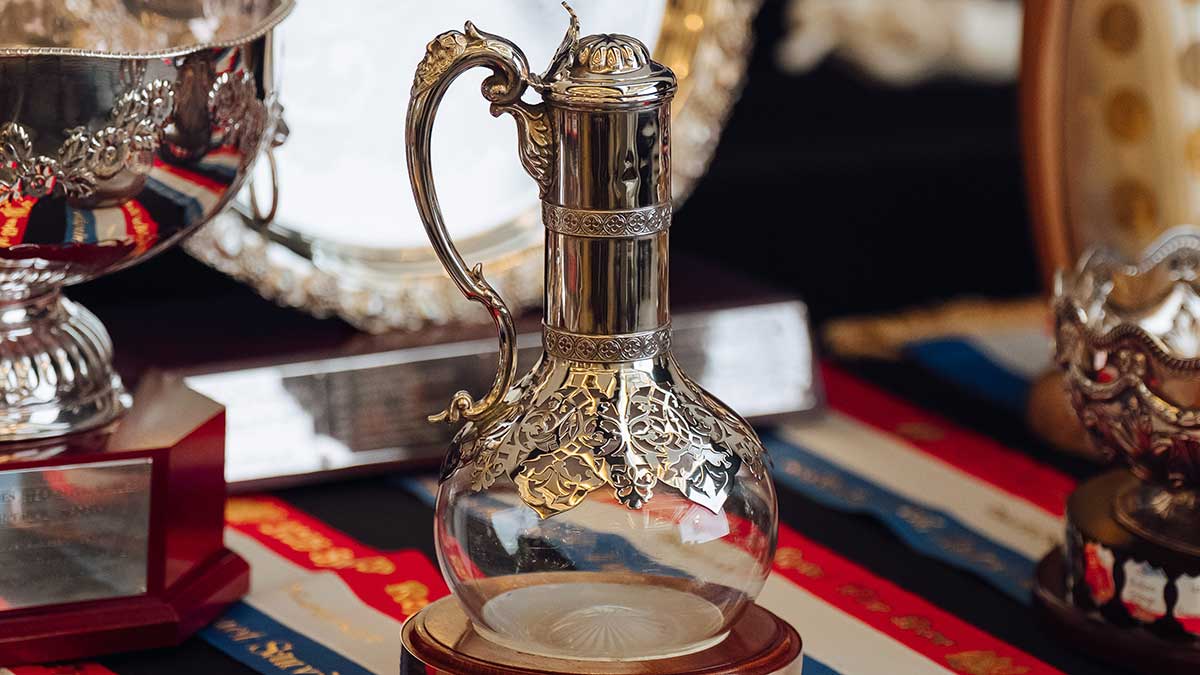
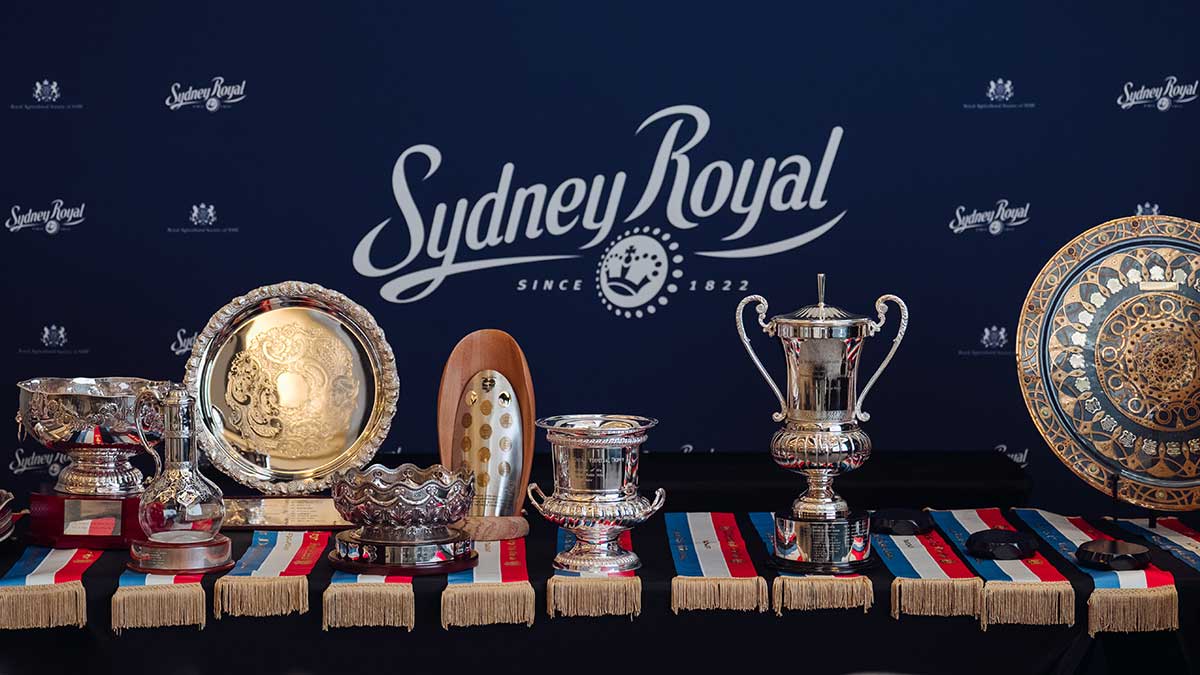
31 perpetual trophies awarded annually, including the McCarthy Shield (est. 1951), the Tucker Seabrook Perpetual Trophy for best wine of Show, the Albert Chan Memorial Prize for Best White Wine of Show and the Dr Gilbert Phillips Memorial Perpetual Trophy for the Best Red Wine of Show. |
| 2026 marks the 200th anniversary - entries open 22 April 2026 and close on 20 May, 2026 |
When the Royal Agricultural Society of New South Wales was formed in 1822, its ambitions were set: "We are just in the latitude of the finest parts of Europe where the vine, the olive, the fig and the mulberry grow…" For those early European settlers, the land held remarkable potential for viticulture.
Grapevines had been planted in the Governor's gardens in Sydney and Parramatta from the earliest days of the colony. Larger estates followed. By 1826, the first President of the Agricultural Society, Sir John Jamieson, had established his own vinery at his estate in Regentville, and the Society's fourth anniversary address was already devoted in large part to the state of the wine industry.
The figure who loomed largest in those early years was Gregory Blaxland. Best remembered today for crossing the Blue Mountains, he was equally remarkable as a viticulturalist. In 1823, Blaxland received a medal from the Society for the Encouragement of Arts, Manufactures and Commerce in London for the best sample of Australian wine, the first award ever given to an Australian for wine. A second medal followed in 1828. The Society's president noted that Blaxland had "the merit of being the first to cultivate the vine to the extent of making a few casks annually."
Blaxland's achievement catalysed others. In 1826, the Agricultural Society of NSW held its first formal wine competition, offering a gold medal for the best sample of Colonial Wine, not less than ten gallons, certified on oath to be from the vintage of 1826, and purely of the juice of the grape.”
The Society's founding vision always extended beyond prizes and competitions. Its original 1822 prospectus called on merchants and sea captains to bring the raw materials of a wine industry to the colony's shores, noting that vessels touching at the Madeira, the Cape "and other countries noted for their wine, their figs, or their olives, might bring what, in a few years hence, may constitute the grand sources of the wealth of this Colony." The prospectus even specified that the foundation of a vineyard could arrive "in cuttings of the vine from the Madeiras, the Canaries, or the Cape, in a rejected empty water cask." From the very beginning, the Society understood that building an Australian wine industry was a practical act of cultivation, not merely an aspiration.
The real turning point came when James Busby returned from an extended tour of Europe's greatest vineyards carrying a collection of vine cuttings from the most celebrated estates in France, Spain and Germany. Many of those original vines didn’t survive; however, the effect on NSW viticulture was transformative. Within a generation, the colony's wine industry had graduated from curiosity to commerce.
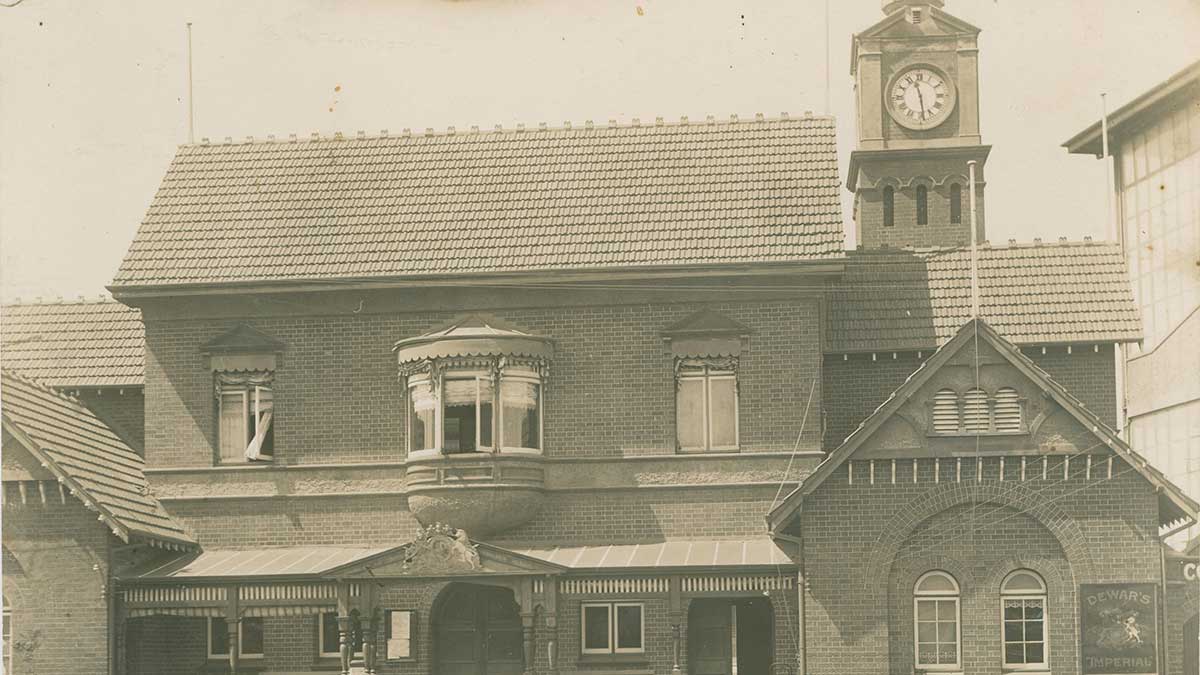
1822
"We are just in the latitude of the finest parts of Europe where the vine, the olive, the fig and the mulberry grow…"
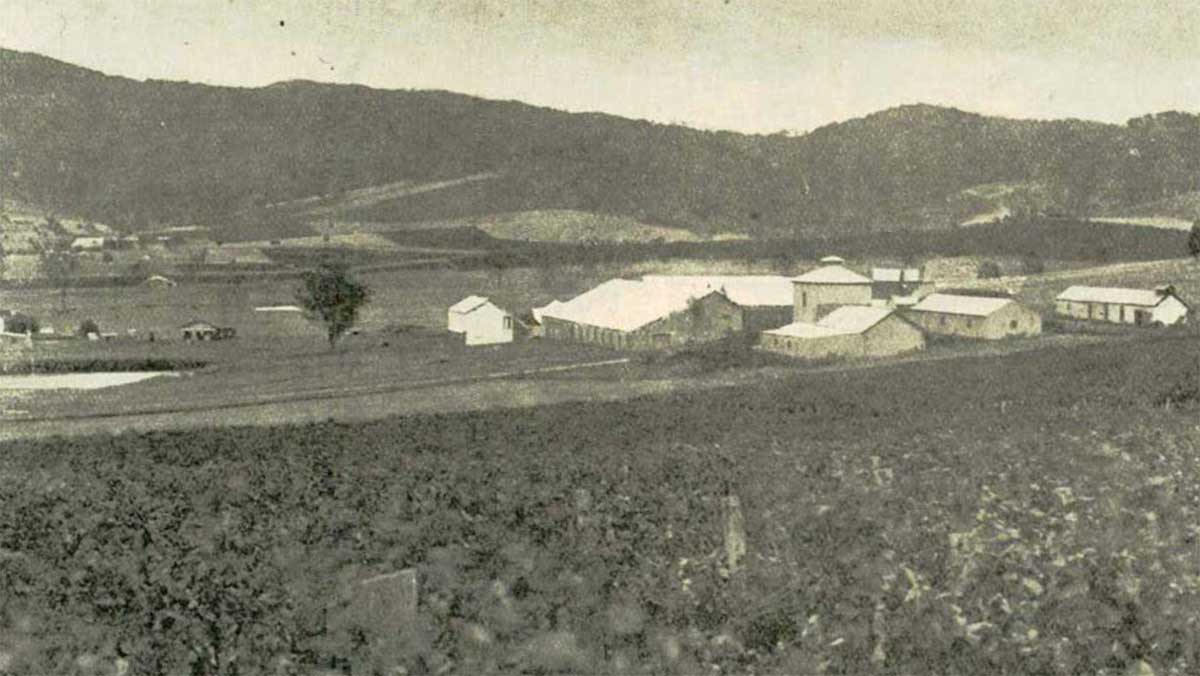
1823
Gregory Blaxland receives a medal in London for the best sample of Australian wine, the first such award ever given to an Australian.
1826
A gold medal is offered for the best sample of Colonial Wine, not less than 10 gallons, certified on oath from the vintage of that year.
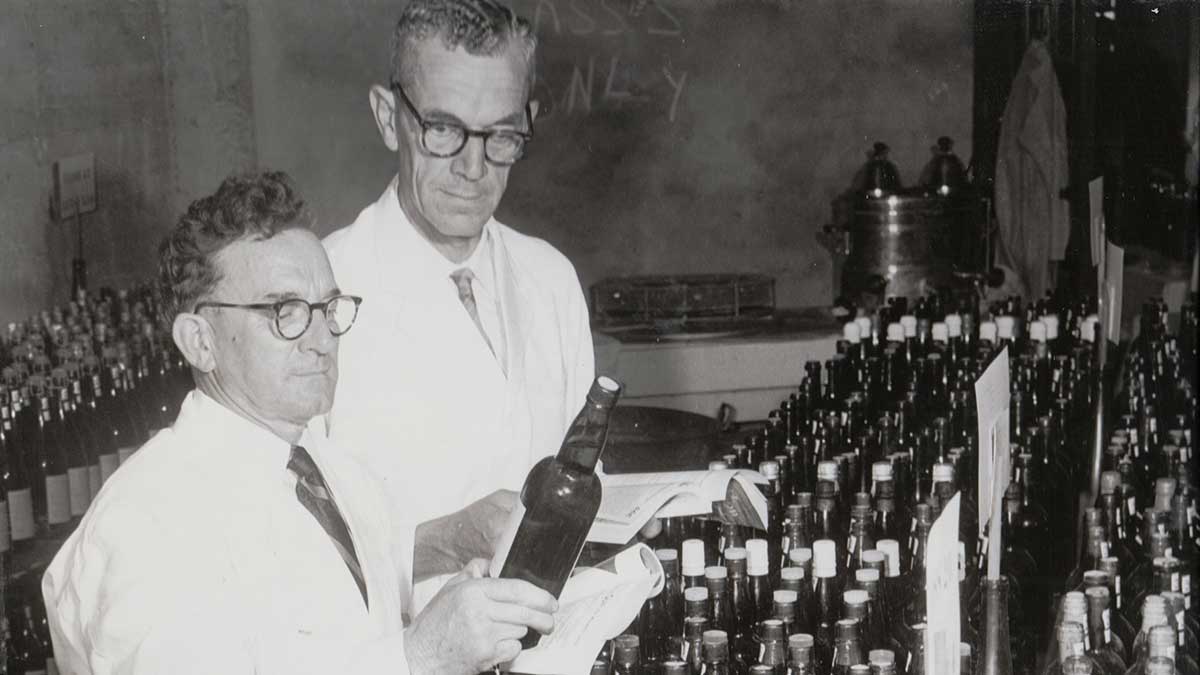
1828
"Exhibitions of wool, wines, tobacco and other produce drew forth the encomiums of all present." Wine was already a point of pride.
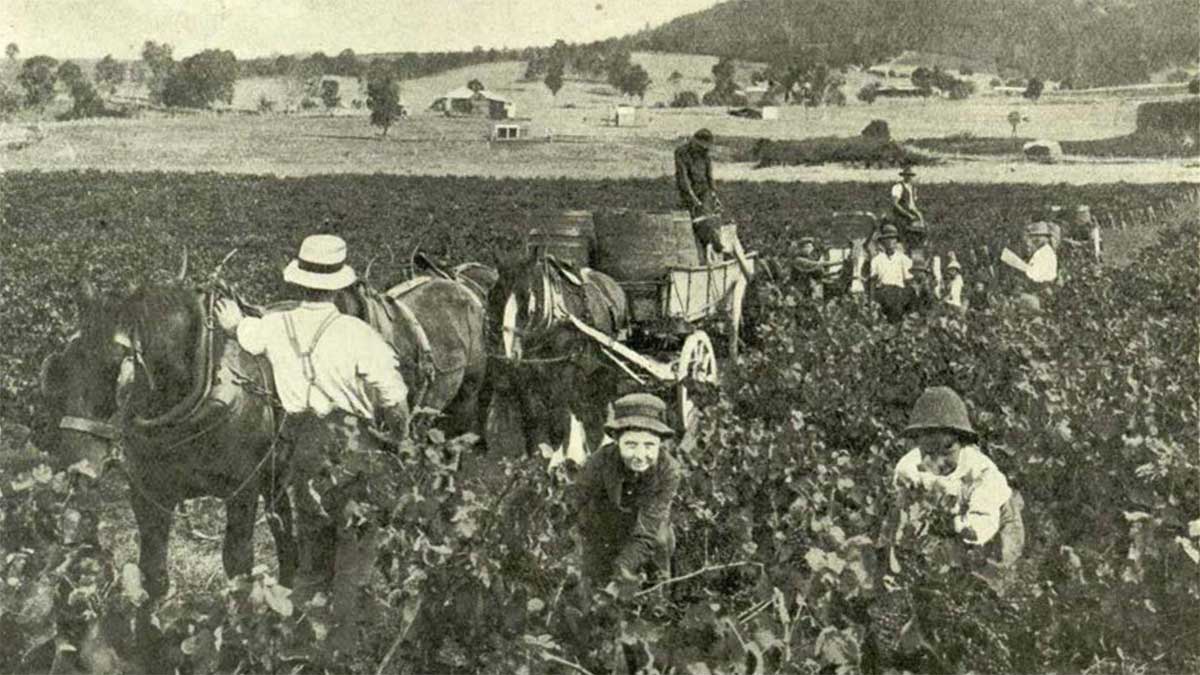
1828
Busby returns from France, Spain and Germany with a collection of cuttings from the most celebrated vineyards in Europe. NSW wine takes off.
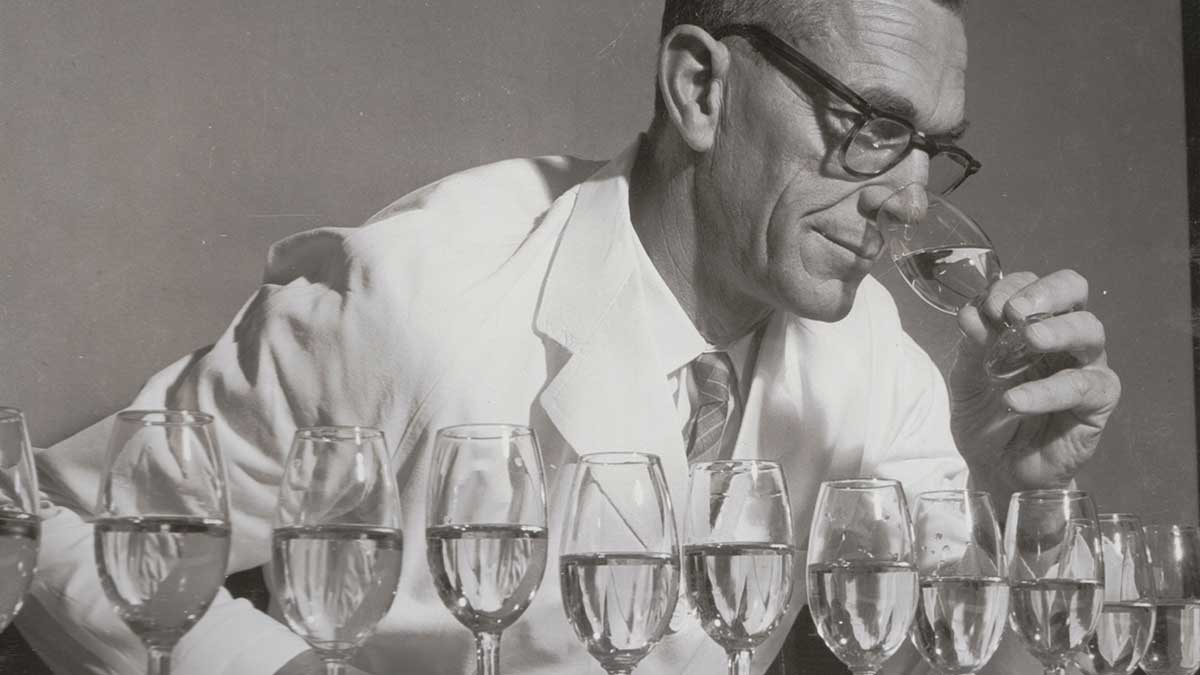
1869
The oldest catalogue held by the RAS Heritage Centre shows a well-established wine section. The show has run every year since, except during war and influenza.
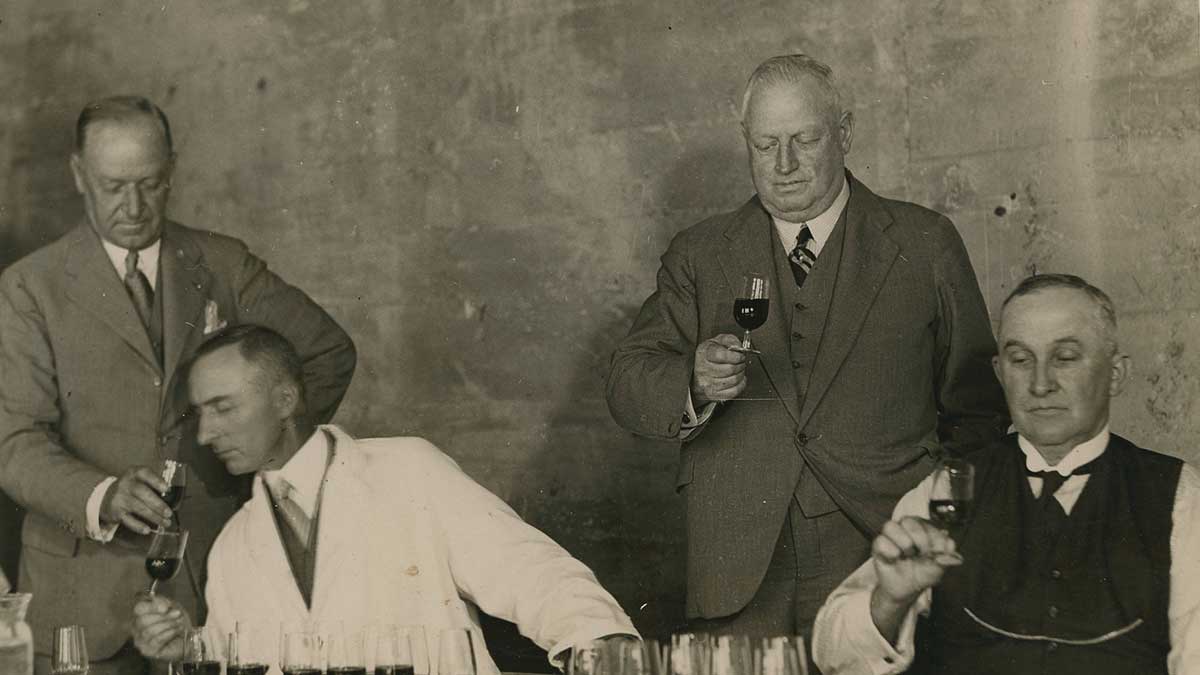
1882
The highest recognition in the world’s most demanding wine culture.
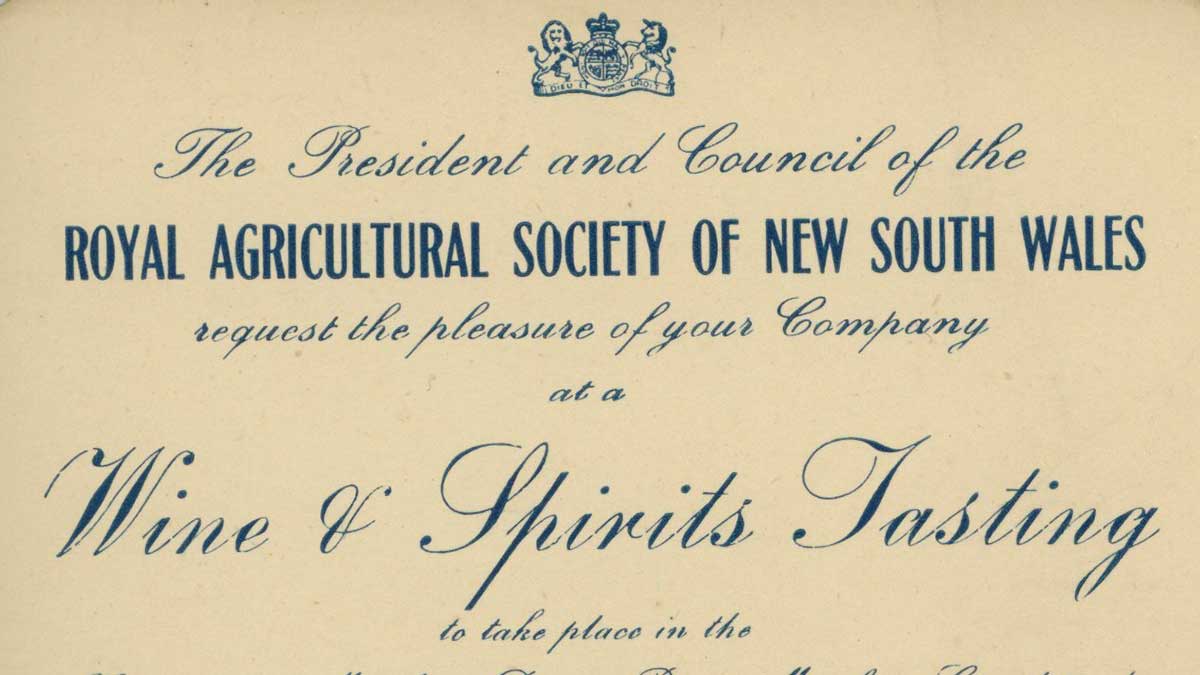
1891
The Society becomes the Royal Agricultural Society of NSW.
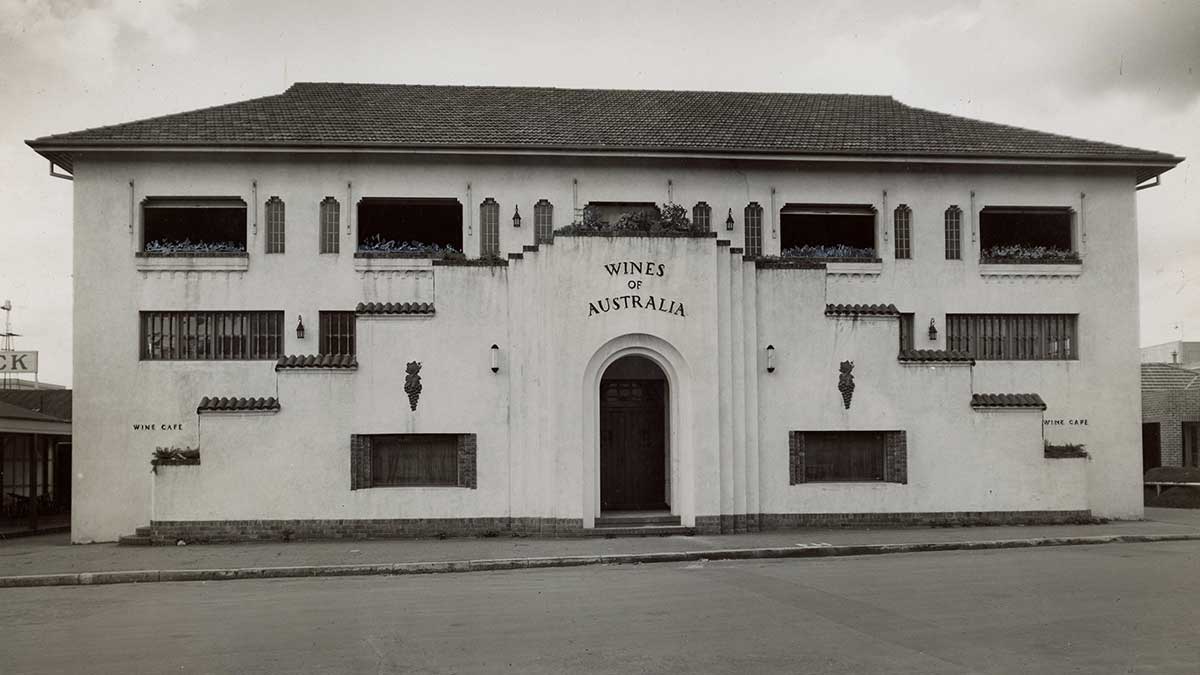
1901
One of the first permanent structures at the Moore Park Showground. Wine had earned its building.
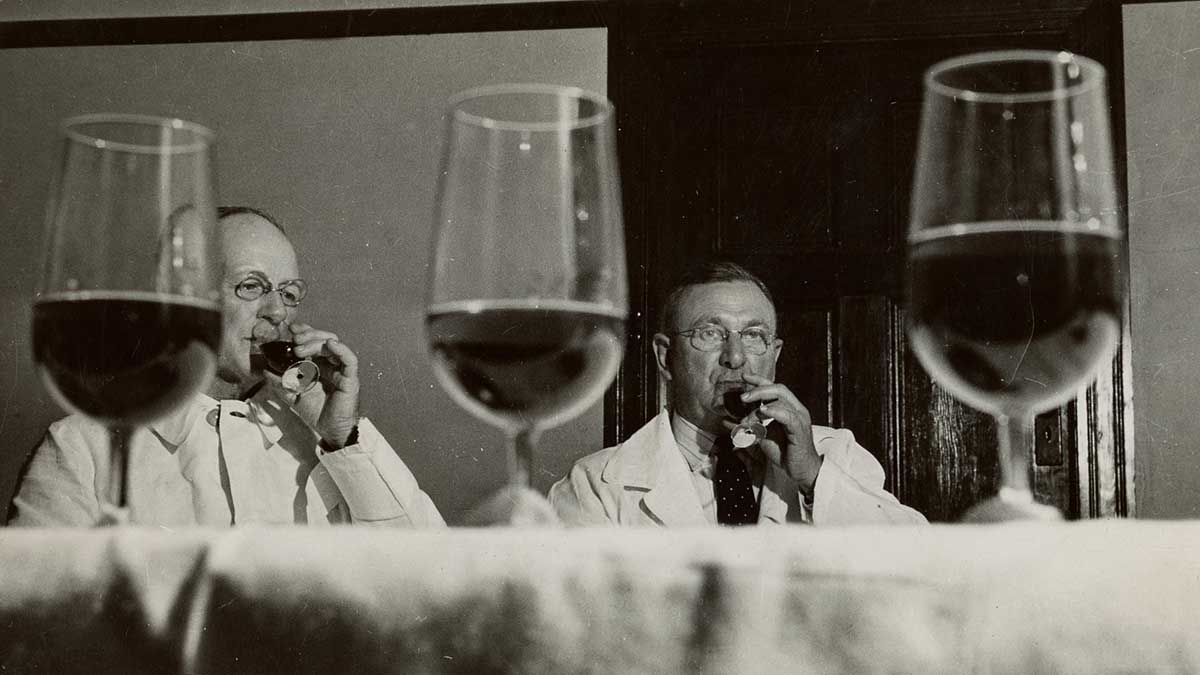
1947
Following WWII, a separate February Wine Show is created, the first-time wine has its own independent competition.
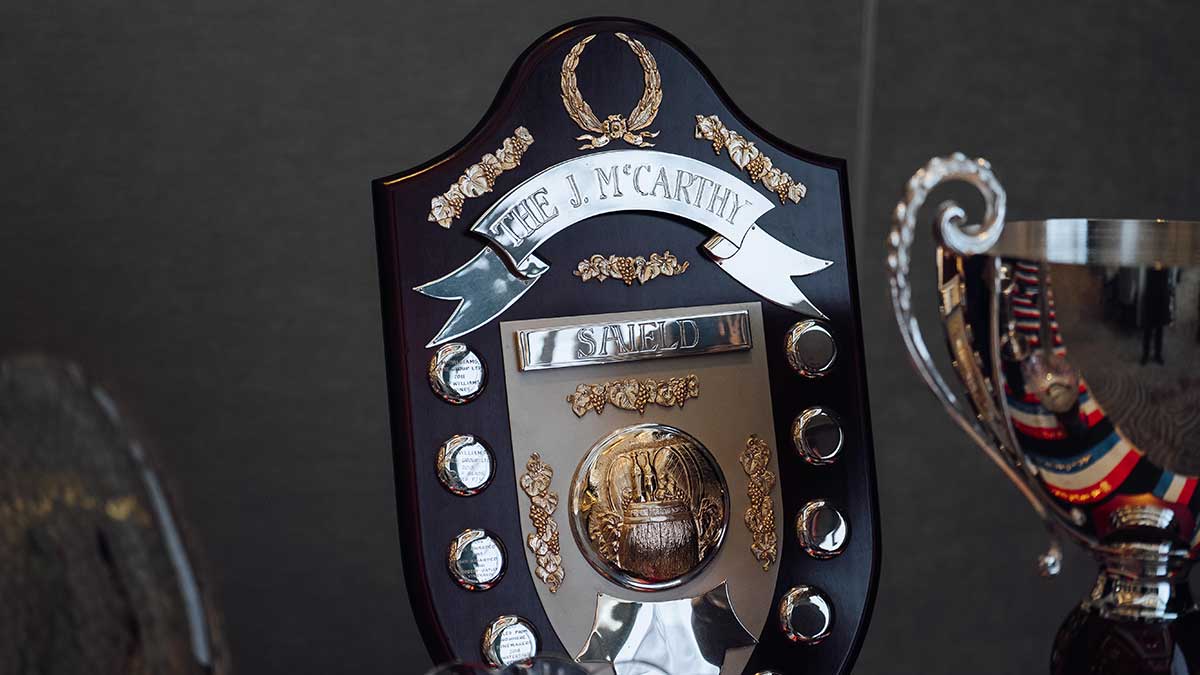
1951
The show’s longest-running perpetual trophy, still awarded today.
1961
The previous standard was 1st, 2nd and 3rd.
1993
The name it carries today.
2013
After being trialled with four classes in 2012, the 100-point scoring system was adopted, replacing scoring out of 20.
2018
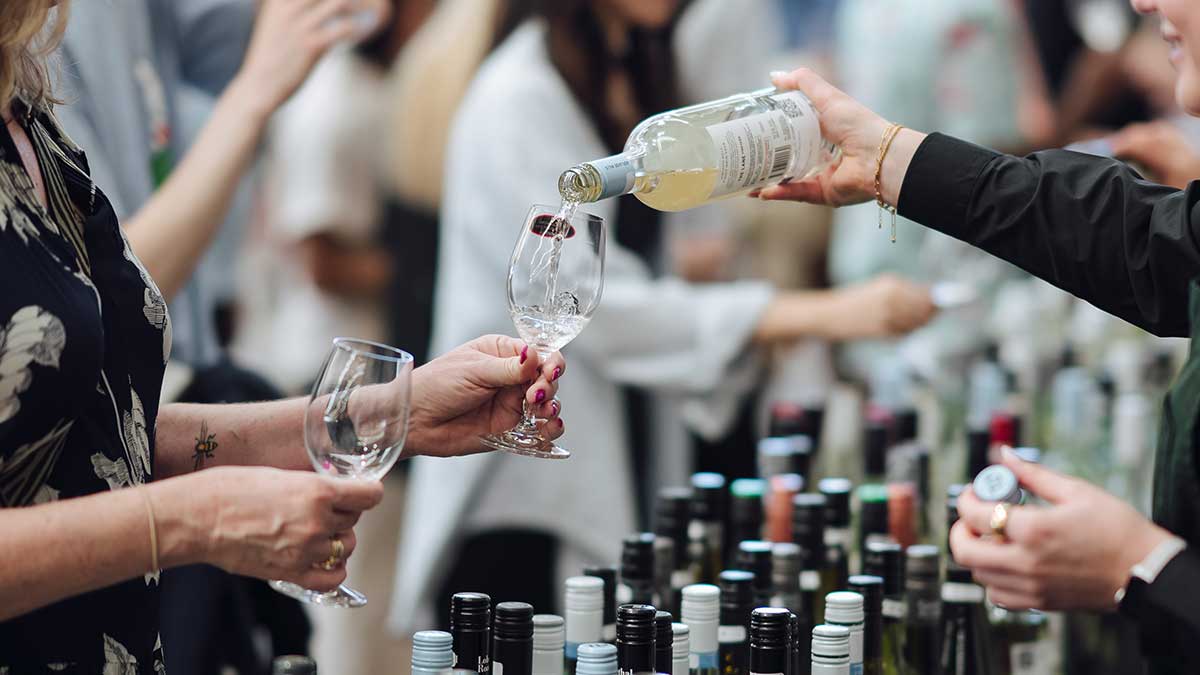
The public festival brings medal-winning producers and consumers together for the first time.
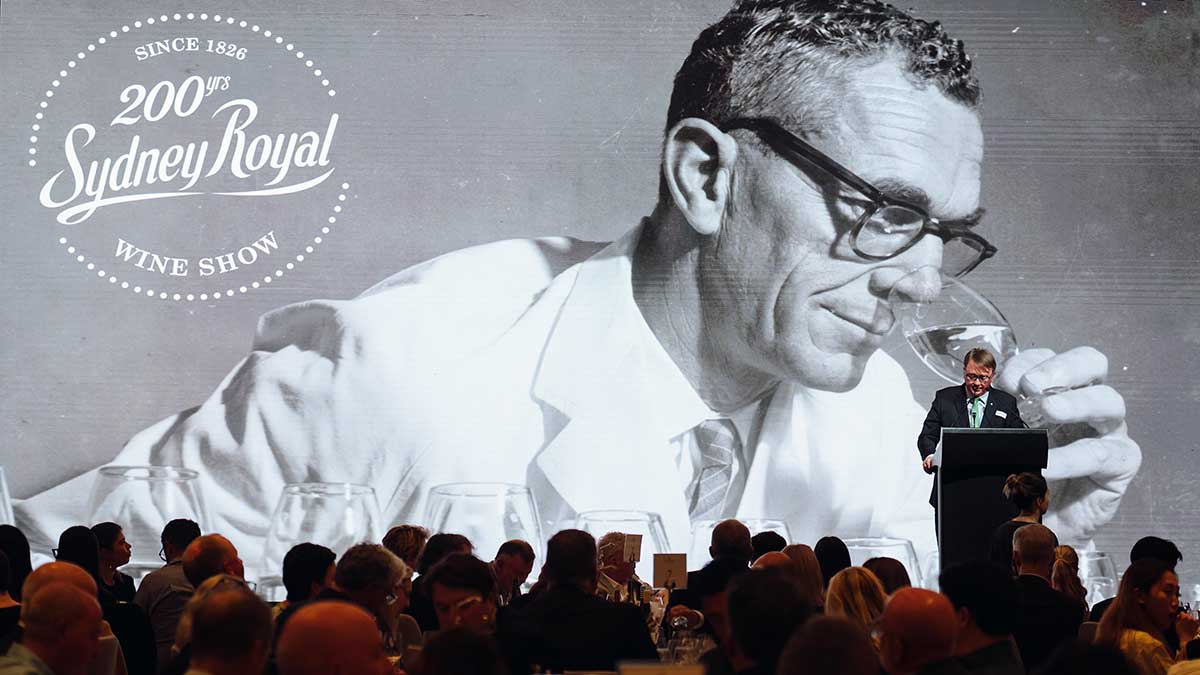
2026
The Sydney Royal Wine Show celebrates 200 years since wine was included in the agricultural show. Judging immersion program launched. Entries open 22 April 2026.
The Royal Agricultural Society of NSW did not merely award prizes. Throughout the 19th century, it functioned effectively as a department of agriculture for the wine industry: identifying disease threats, circulating scientific literature and even drafting legislation.
In 1868, the Society established a Scientific Committee specifically concerned with vine diseases. When oidium and other blights threatened the colony's vineyards, the committee acted immediately, requesting all vine growers to carefully observe and document affected plants and submit specimens to the Society's secretary. In 1869, a case of books arrived from Paris containing every French publication on vine disease up to December 1868. NSW vignerons were being kept at the forefront of knowledge in the world.
When the science was not enough, the Society turned to Parliament. It drew up the "Vine Disease Prevention Bill 1869" and arranged for it to be submitted with a petition signed by upwards of 800 vignerons.
By the 1870s, the quality of NSW wines was being recognised far beyond the colony's borders. Prizes were awarded at the Paris Exhibition of 1878, followed by a series of successes at Philadelphia, Sydney, Melbourne and Amsterdam. But the achievement that stands above the rest came at the Bordeaux Exhibition of 1882, where
NSW wines were classified by the most competent judges in the category of 'grand vins', the highest designation in the world's most demanding wine culture.
That recognition, earned in Bordeaux, was built on the foundation of the competitions the Agricultural Society had been running in Sydney since 1826. The discipline of judging, the standards being set, the expertise being developed: all of it can be traced back to that first modest competition and gold medal for Colonial Wine.
In 1891, the Society received the Royal prefix, becoming the Royal Agricultural Society of NSW. Its wine competition had by then been a fixture of the Royal Easter Show for decades, exhibited in the annexe to the Main Pavilion before eventually outgrowing it entirely.
As the 20th century began, the wine competition had grown large enough to demand its own space. The Central Australian Wine Association, now known as Wine Australia, took up the matter with the RAS and pressed for a dedicated building. In 1901, the Society commenced construction of a Wine Kiosk at Moore Park Showground, one of the first permanent structures. The foundation stone was laid by the Hon J Kidd, Minister for Mines and Agriculture, with papers, wine and coins placed beneath the memorial cornerstone. The Kiosk opened in 1902 on Park Road – fittingly between Burgundy Street and Claret Street – on the south-western side of the grounds.
The following decades would see the competition evolve in step with Australian wine culture. New categories were added and removed as fashions changed. In 1900, the Minister for Agriculture granted £100 to provide new wine prizes open to growers and merchants producing wines solely in NSW. By 1907, the section had expanded to include not just wine but spirits, beers and more, reflecting the full range of what NSW producers were making.
A 1936 refurbishment added a wine café to the pavilion, creating a space where show visitors could taste the competing wines directly – a concept that would not fully bloom until more than 80 years later.
World War Two interrupted much of Australian public life, and the wine competition was no exception. But when peace came, the Society took the disruption as an opportunity. Rather than simply returning the wine section to the Sydney Royal Easter Show, a separate February Wine Show was established in 1947. For the first time, wine had its own dedicated competition, no longer a section within a larger agricultural show but an event in its own right.
The competition matured rapidly in the decades that followed. The McCarthy Shield Perpetual Trophy was first awarded in 1951 and it remains the show's longest-running perpetual trophy. The number of entries grew year by year and the judging became more sophisticated. The show's name evolved with its identity, too; the Royal Sydney Wine Show became the Sydney Royal Wine Show in 1993.
Former Chair of judges, the late Len Evans noted in an interview in 1996 how much the judging of the show had actually evolved – moving from one or two panels when he commenced judging in 1963 to a more rigorous system with Panel Chair experts leading discussions by the time he’d completed his tenure. Sydney Royal was internationally regarded as a beacon of wine evaluation – international judges joining to help better the breed and return to their market to tell stories of their new wine discoveries.
The show continued to evolve and become ever more sophisticated and aspirational for wine producers right around the country. By 2007, almost 300 exhibitors were competing across 60 classes. By 2014, that had grown to 362 exhibitors across 72 classes, competing for 31 Perpetual Trophies. And in 2016, the show moved to its current July/August window, better aligning the judging with the pace of the Australian vintage cycle. This helped to free up judges and others in the industry, while also ensuring the judges’ critical feedback lands at an opportune time in the production cycle.
Former Chair of Judges, Iain Riggs AM noted the evolution of the show since the early days, when he first joined Brokenwood wines in 1983. At the time, he was unable to be an Associate Judge until 1990, with the clash of the Hunter Valley vintage, meaning he needed to wait until there was an
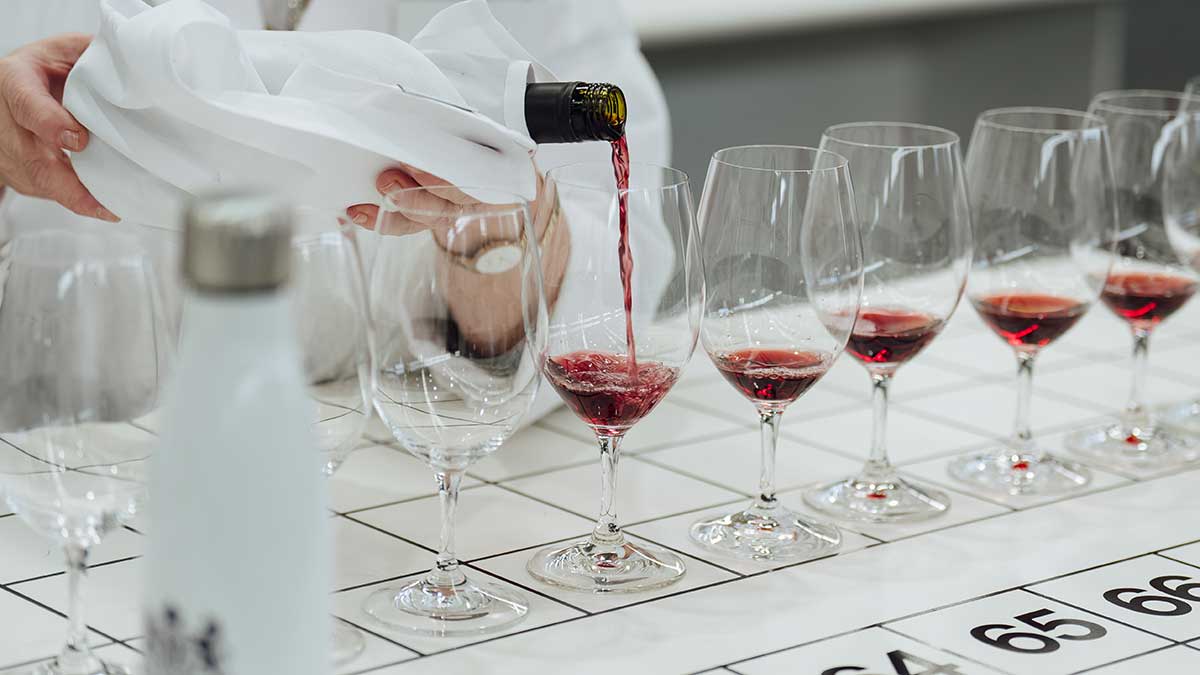
Assistant Winemaker in place to hand over the reins and commit to judging. Iain progressed from Associate Judge Panel Chair and, from 2009 was the Chair of Judges for six years, handing over the baton to Samantha Connew. It was hard work – back then, 200 wines a day were evaluated, with often 80 glasses of wine poured in front of a judge.
The show has kept abreast of drinking styles, evolving from the days of fortified wine evaluation to focusing on some of the classic varietal styles like Chardonnay and Shiraz. Since that time, there have been caps on the number of entries, with a concentrated effort to reduce the number of wines per day, introduce Riedel magnum glasses instead of the older XL5, increase in the number of panels, more diversity in the judging ranks.
Over the last decade, from 2015-2025, the show has seen 19,938 wines entered (noting no show due to COVID in 2020). Stylistic changes continue to see tweaks to the established systems. For many years, the Rosé Trophy was not awarded. Iain Riggs suggested a collaborative tasting with the winners from the RAS Fine Food judging and the top 6-10 Rosé Gold Medal wines were rejudged alongside cured meats, bread and olives to allow the true flavours to shine trough. Since then, the Rosé trophy has been awarded many times. Similarly, the sparkling reds were judged alongside chocolate – allowing the wines to be carefully considered in how they were assessed.
For most of its history, the Sydney Royal Wine Show was an industry event. The public saw the medals on bottle labels in bottle shops, but the competition itself, the panels of judges, the scoring sheets, the deliberation, was largely invisible to them.
In 2018, that changed with the launch of the Grape, Grain & Graze Festival. For the first time, consumers could come face-to-face with the winemakers behind the medals, taste the competition's award-winning wines, and understand what the Sydney Royal Wine Show mark actually means. More than 370 exhibitors across Australia now participate, with more almost 2000 wines entered each year. The festival has transformed the show from a trade competition into a public celebration of Australian wine excellence.
"The Sydney Royal Wine Show has been setting the benchmark for Australian wine quality since 1826, and that history gives both exhibitors and consumers something genuinely valuable — trust. When a wine earns a medal at the Sydney Royal, it means something, because this show has pushed the bounds of agricultural excellence for 200 years. Results are often editorialised around the world. That integrity in the marketplace is not something you can manufacture.” Angus Barnes, Chair of Wine Committee, Sydney Royal Wine Show
The 200th anniversary show will be the most significant in the competition's history. For the first time, a judging immersion program, The Sydney Royal 200 will open the process to industry observers, giving winemakers, wine writers and enthusiasts a genuine behind-the-scenes view of how Australia's oldest and most rigorous wine competition actually operates.
Entries for the 200th Sydney Royal Wine Show open on 22 April 2026. For producers across Australia, this is an extraordinary opportunity: not merely to win a medal, but to also be part of the anniversary that marks two centuries of excellence.
And for consumers, the medals that emerge from the 200th show will carry a weight of history behind them that no other competition can offer. When you see a Sydney Royal Gold Medal in 2026, you are looking at the exceptional standards that have been set, upheld and refined for 200 years.
What is the oldest wine show in Australia?
The Sydney Royal Wine Show, established in 1826 by the Agricultural Society of NSW, is the oldest wine competition in Australia. It has run continuously since that year, interrupted only by the World War years and the 1919 influenza pandemic.
When did the Sydney Royal Wine Show start?
The first wine competition was held in 1826, when the Agricultural Society of NSW offered a gold medal for the best sample of Colonial Wine. The Society was founded in 1822 and is today the Royal Agricultural Society of NSW (RAS NSW).
Who runs the Sydney Royal Wine Show?
The Sydney Royal Wine Show is run by the Royal Agricultural Society of NSW (RAS NSW), the same organisation that has run the competition since 1826. The RAS NSW was formed in 1822 and received the Royal prefix in 1891.
How are wines judged at the Sydney Royal Wine Show?
Every wine is assessed by a panel of three independent judges, scored out of 100 points. Gold medals are awarded to wines scoring 95 points and above; Silver medals for 90 to 94 points; Bronze medals for 85 to 89 points. Each judging panel assesses approximately 130 to 150 wines per day across six panels.
What does a Sydney Royal Wine Show gold medal mean?
A gold medal means that three independent, expert judges agreed that a wine scored 95 points or above out of 100. It is one of the most rigorous assessments available in Australian wine.
How do I enter the Sydney Royal Wine Show?
Entries for the Sydney Royal Wine Show open in April each year. For information on entry categories, eligibility and fees, visit rasnsw.com.au. Entries for the 200th anniversary show open on 22 April 2026.
What is Grape, Grain & Graze?
Grape, Grain & Graze is the public festival run alongside the Sydney Royal Wine Show, launched in 2018. It gives wine lovers the opportunity to taste medal-winning wines directly from the producers, making the competition's results tangible and accessible to everyone. In 2025 there were over 1000 consumers who attended. You can find more information at rasnsw.com.au/events/grape-grain-graze.
Whether you're a winemaker, a wine lover or simply someone who wants to taste the best Australian wines, get involved in the 200th Sydney Royal Wine Show.
Producer entries open 22 April 2026 | Close 20 May 2026