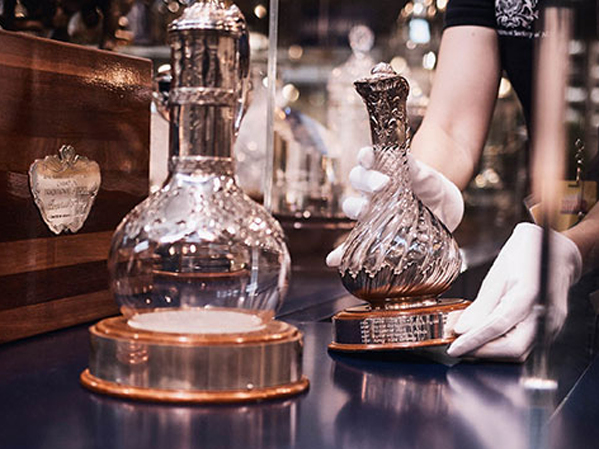
Over two centuries the Royal Agricultural Society of NSW has carefully gathered and preserved the documents, photographs and memorabilia that record its rich history. Here in the Virtual Museum, explore how the RAS and its premier event, the Sydney Royal Easter Show, have evolved from 1822 to today. Explore our detailed timeline and consult our Trophies section to discover the winners of every perpetual trophy awarded across the entire range of our competitions.
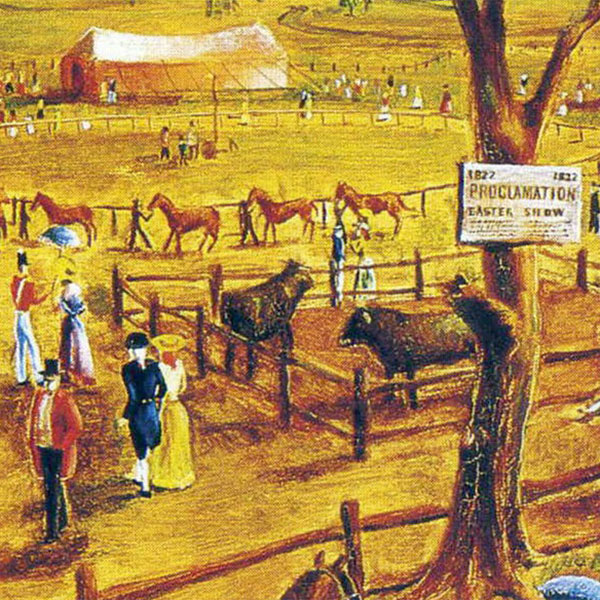
1822
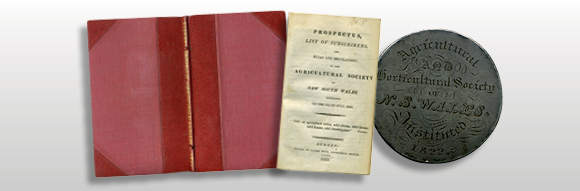
The Agricultural Society publishes a prospectus: it announces an Annual Show of Livestock to encourage competition and sharing of knowledge. The prospectus laments the damage done to the land by bad farming practices and resolves to help farmers employ better practices to ensure sustainable farms and land usage. The original members of the Society include many of Sydney's most influential citizens.

1823
Awards are given for the best Sheep, Cattle, Horses and Servants. Sheep must be "Australian Merino" and Cattle and Horses must be "colonial bred". Servants are judged on good conduct, faithful service and animal husbandry skills.

1825
The Society contines to award prizes however cash prizes, which tend to encourage 'intoxication and other excesses' are replaced by medals of silver and gold.
1825
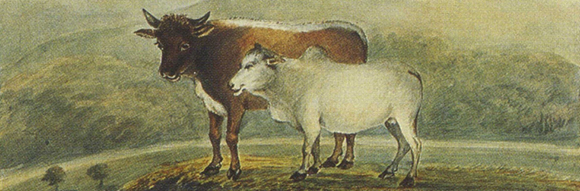
The Stock Fund had been established in 1822 to buy good stock, plants, seeds, machinery and textbooks from England and other parts of Europe. Members were asked to contribute to the Stock Fund in addition to their membership subscriptions and £1150 was raised in the first round. By 1825, plans have come to fruition and Durham cattle, Devonshire cattle and Merino sheep are purchased to improve the colony's stock.
1826
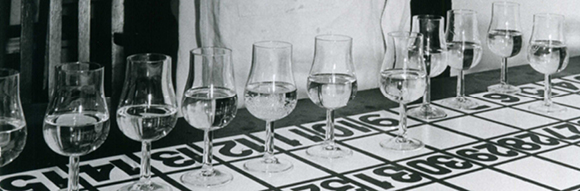
In the fourth anniversary address to the Society the President reports on the state of the wine industry. Gregory Blaxland has been awarded a medal by the society for the Encouragement of Arts, Manufactures and Commerce in London for the best sample of Australian wine. It marks the beginning of the wine industry in Australia and recognises the role that wine will play in the agricultural development of Australia. Ever since, wine has played a significant part in Sydney Royal competitions, ensuring for the winners recognition and a valuable opportunity to shine the spotlight on their wines.
1834
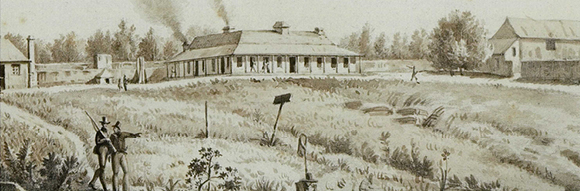
A combination of declining membership, rising debts and waning confidence in the Society takes its toll and the Society lapses in 1834.
1857
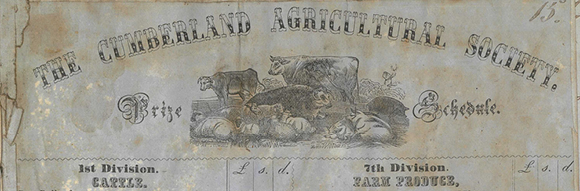
In 1858 a Show is held at Collingwood near Liverpool, the property owned by member JH Atkinson. In 1859 the Society renames itself the Agricultural Society of NSW.
1858
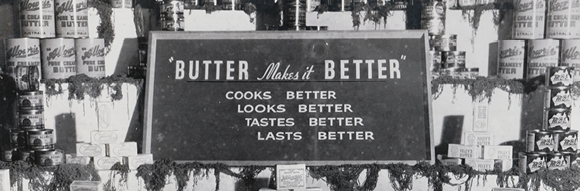
Classes for cheese and butter are recorded in the Prize Schedule of the Show in 1858. These classes later form part of the food section of the Show and are joined by entries in chocolate, preserved butter, preserved milk and condensed milk.
1860
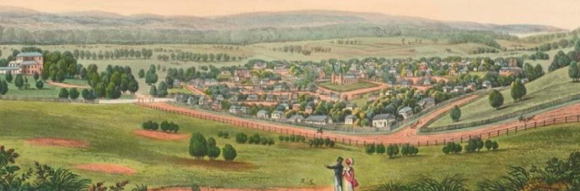
In 1859, six hectares of land are acquired in the Parramatta Domain for the use of the Society - the government sets aside a further 2.8 hectares.
1868
The need for a Journal is explained in the first publication "...Those who have been accustomed to grazing and farming in England, or Ireland, or Scotland, have much to un-learn before they can succeed here, and those who have no previous experience of good husbandry - and these form, by far the greater portion of land-holders, have everything to learn."
1869
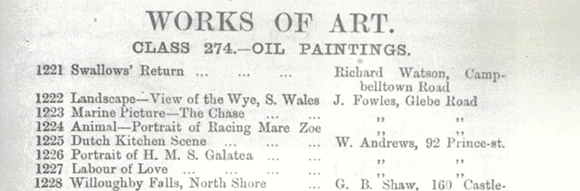
Arts and Craft items first made their appearance at the Metropolitan Intercolonial Exhibition. The section ‘Works of Art’ included paintings, photographs, models, wool and waxworks. Another section headed ‘Articles of Colonial Manufacture’ showed a wide range of craft products from glassware to perfumery, along with other manufactured goods.

1869
To increase attendance and exhibitors, the Society decides to move the Show closer to Sydney and adopts Prince Alfred Park as its new home. Classes are offered for livestock, farm produce, wine, horticulture, poultry, manures, farm machinery and "articles of colonial manufacture". A special feature is the fine arts exhibition designed to "improve taste and develop artistic faculty."
1875
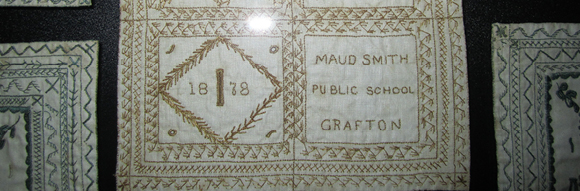
The first schools competitions are introduced at the Metropolitan Intercolonial Exhibition with classes for needlework, wood carving, drawing and natural history collections for girls and boys.
1876
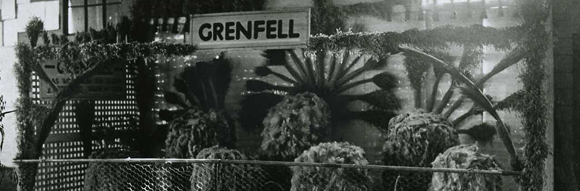
Show Societies are asked to mount displays of their produce. Depending on space available, the displays are exhibited sporadically throughout the late 1800s. They become a permanent feature in 1900.

1876
Thomas S Mort, President of the Society in 1863, had a grand plan to establish an export frozen meat trade. Recognising the potential of this innovation, the Society raises £62,000 (equates to over $7 million in today's currency) to help him test his theories. In 1876 a ship was fitted out but the meat spoiled before it sailed. Disappointment hastened Mort’s death in 1878 but only a year later a shipment was successfully sent to England.
1879
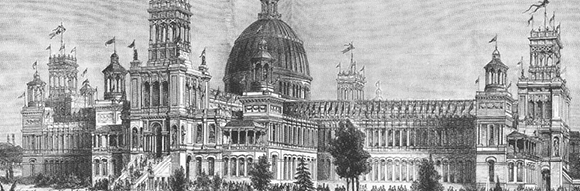
The Agricultural Society responded enthusiastically to the opportunity to be involved in the organisation of the International Exhibition in Sydney. As the exhibition grew in size, unrealistic expectations, inadequate funds and political discontent meant that in the lead up to the event the NSW Government took over all organisation and funding of the exhibition. The Agricultural Society was awarded a large silver medal for "originating the scheme for [the] International Exhibition."
1882
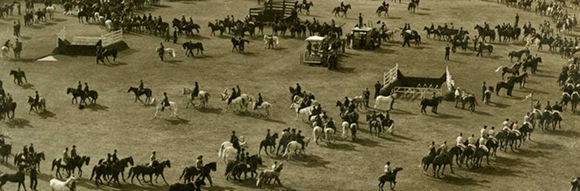
Due to rising costs, the Society moves the Show to new grounds at Moore Park. The site is described as a "desert of rocks and swamp" with some holes 5m deep. A major rehabilitation project is required to ensure the grounds are ready in time for the Show to open. After torrential rain delays proceedings, the first Show at Moore Park opens on 8 April, 1882.
1891
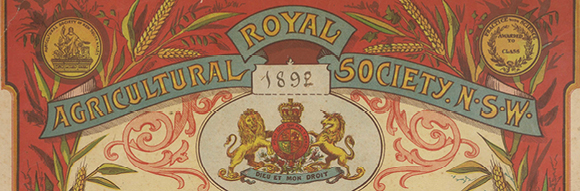
Queen Victoria grants permission for use of the prefix "Royal".
1899
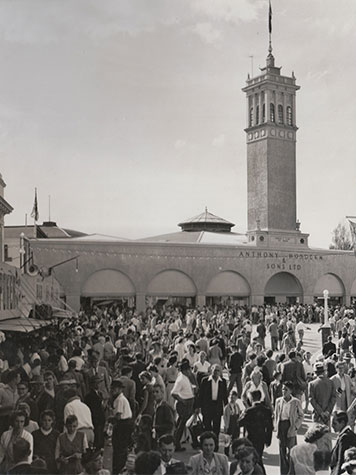
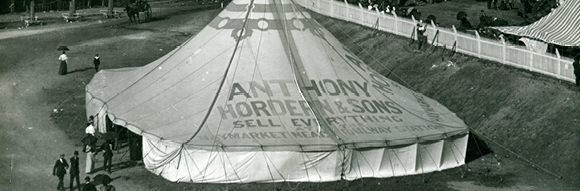
Retailer Anthony Hordern erects a permanent building, replacing the large tent previously used. In 1924 this is in turn superseded with a larger, more elegant building which is later repurposed as the Banquet Hall.
1899
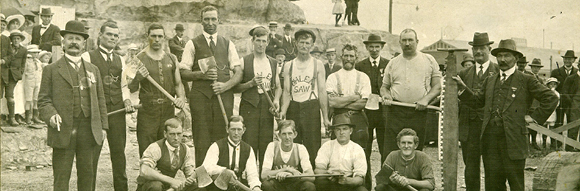
The inaugural competition is held on the last day of the Show in the cattle-judging ring. In its first year it includes only standing cut competitions, but its popularity means that these quickly expand to include sawing and other events.

1900
The Society hesitates but decides 'the Show must go on'. Vendors of patent medicine and disinfectant make the most of the situation, selling gallons of infusions and thousands of pills. In Sydney, 113 people die of the plague.
1900
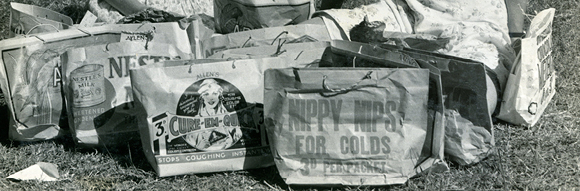
Business is noticeably brisk at stands which give out free samples, even if the products aren't particularly useful. Soon after, companies start placing samples in labelled bags.
1900
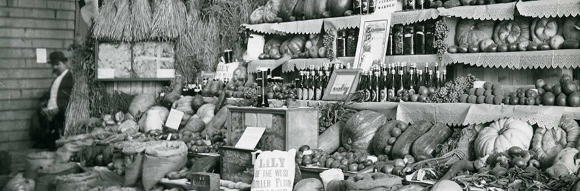
The first formal District Exhibit Competition is held at the Grand Easter Show.
1901
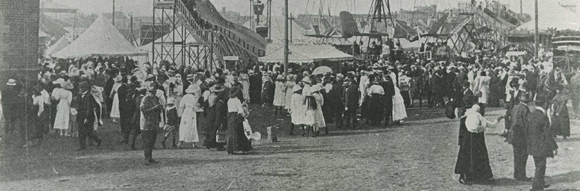
As part of the automobile exhibition, two 'carriages' are sent around at an exhilarating 30 miles per hour (nearly 50km/hr). Rides quickly became a staple of the Royal Easter Show experience.
1903
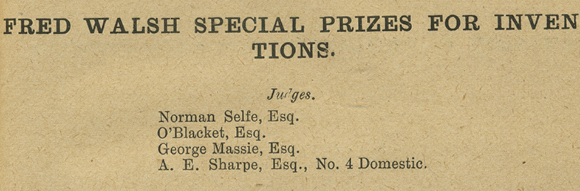
The Fred Walsh Special Prize for Innovation is introduced. Inventions have to be patented in Australia. It runs until 1908 and encourages innovation in mining, agriculture, manufacture and domestic classes. Exhibits include an automatic rabbit trapping fence, a sanitary extension pan, a ventilated butter cooler and the plans and specifications of an apparatus for elevating water.
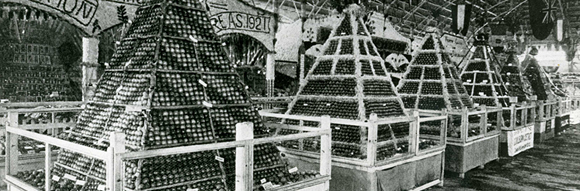
1904
An early pre-cursor of the Schools District Exhibit Competition held at the Show today.
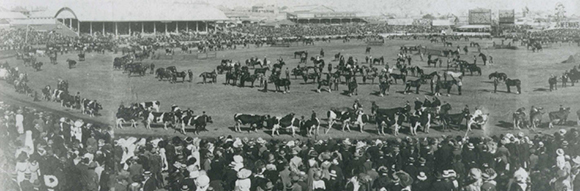
1907
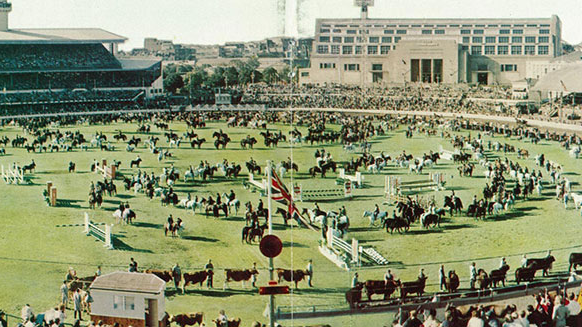
A combined "parade of stock" is held in the Main Arena (or ring as it is known) which includes horses and cattle. The concept is well received and the idea quickly becomes an annual event with new animals joining the parade each year. The 'Grand Parade' celebrates its centenary in 2007 and remains one of the most popular attractions at the Show.
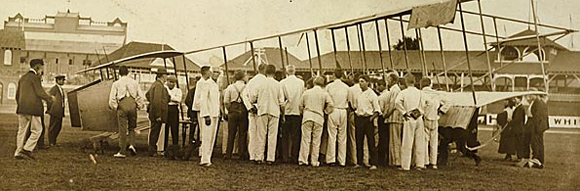
1911
Pioneer aviator William Hart takes off from Penrith and lands at the Show.

1914
Outside of Show time, troops are billeted on the Showground throughout the war.

1915
Mrs Stace sets an unbroken side saddle showjumping record of 6ft, 6in (2.01m).
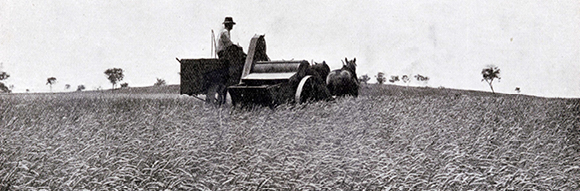
1916
The first field wheat competition is held; established to encourage excellence and sustainability in grain crop production.
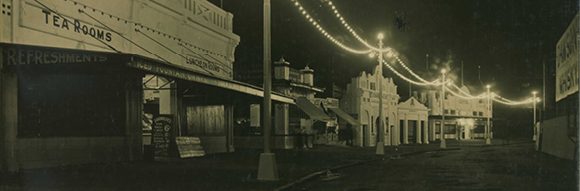
1917
Extra funds are raised from the extended hours permitted by the use of lighting. These funds are given to the Red Cross Society to support the war effort.
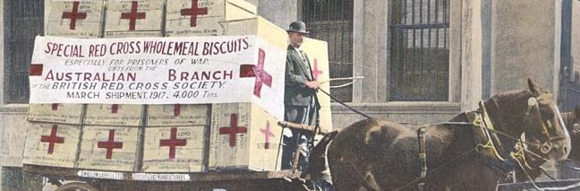
1918
The RAS Council votes to donate funds to assist returned soldiers to obtain instruction and training in Agriculture.

1919
Returning soldiers bring Spanish Influenza to Sydney and the government bans public gatherings to halt its spread. The virulent strain causes 848 deaths in 1918. The larger buildings at the Showground become emergency hospitals and the Royal Hall of Industries serves as a morgue.
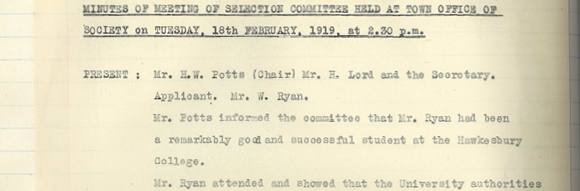
1919
RAS Scholarship awarded to W Ryan to study agriculture at Sydney University.
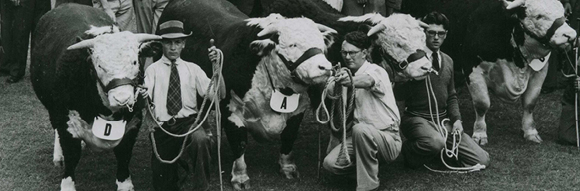
1920
Students aged 19 and under judge competitions for Light Horses, Clydesdale and Draught Horses, Dairy Stock, Beef Cattle, Pigs, Poultry, Wheat, Maize, Wheaten Chaff, Oaten Chaff, Lucerne Chaff and Potatoes.
1920
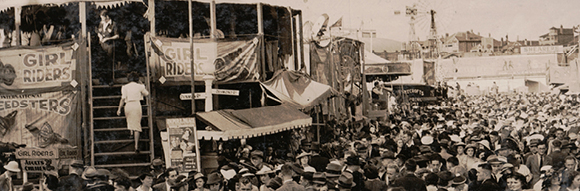
Students aged 19 and under judge competitions for Light Horses, Clydesdale and Draught Horses, Dairy Stock, Beef Cattle, Pigs, Poultry, Wheat, Maize, Wheaten Chaff, Oaten Chaff, Lucerne Chaff and Potatoes.
1926
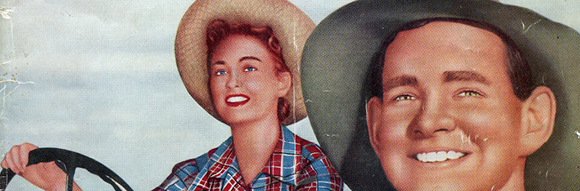
In response to the Soldiers' Settlement Scheme, leaders in NSW Agriculture gather at the rooms of the Royal Agricultural Society to discuss the need for information on modern farming practices. The idea for a network of educational clubs across the state is born - this becomes the Junior Farmers Movement.
1929
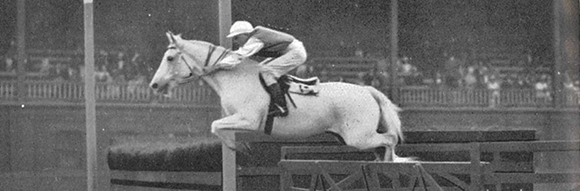
The high jump horse event for men starts at 9pm on the last Saturday night of the Show. Competition is so tense 50,000 people stay until it ends at 12.45am. After a thrilling battle a fellow called Chittick clears 7ft 6in (2.3m) on the champion horse, Dungog. Most of the crowd have to walk home as public transport stopped at midnight.
1931
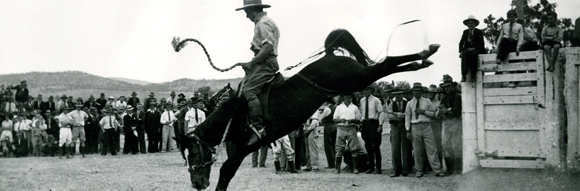
Wild West stars are imported from America as main arena entertainment. Throughout the 1930s, Suicide Ted Elder, Jasbo the Clown, cowgirls, trick riders and Native American Indians are popluar visitors.

1932
Livestock in the Grand Parade form the shape of the Sydney Harbour Bridge to celebrate its opening.
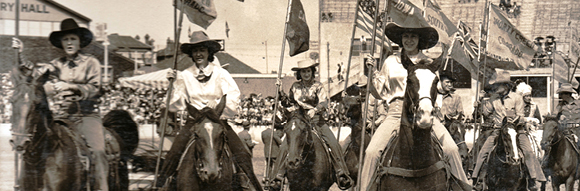
1937
Almost one third of the 11000 exhibitors are women, in the entertainment arena, daring cowgirls seize the popular imagination. For the first time a woman, Miss Cargill, bids for stock at the cattle sales.
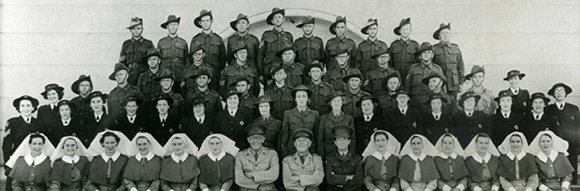
1942
No Shows are held for the remainder of WWII (1942-1946).
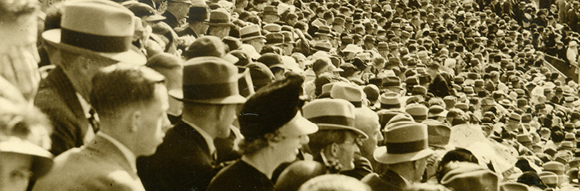
1947
Everyone celebrates the end of hostilities by flocking to the Show. Attendance breaks all records at 1, 232, 413 - at the time, the total population of Sydney is just over 1.5 million.
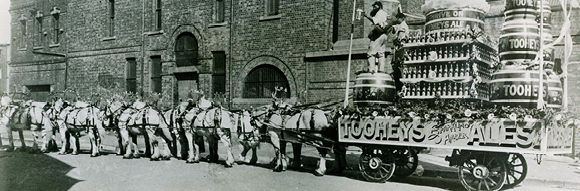
1948
A strike at the brewery results in a beerless Show. Many patrons 'discover' wine.

1957
The RAS capitalises on the arrival of television to get its messages out - each week summaries from sectional meetings are sent out to 160 radio, newspaper and television programs.
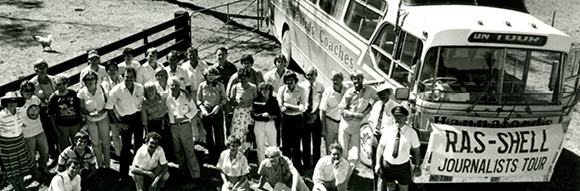
1958
Journalists are taken to visit a selected region to generate publicity for the Show. It helps reporters familiarise themselves with the lives and concerns of farmers and rural communities.
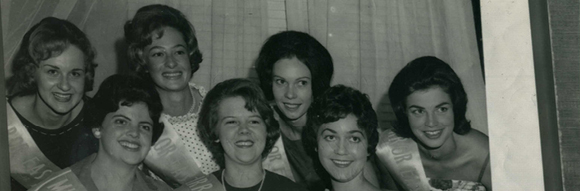
1962
Introduced to strengthen links between the RAS and local organisations, the Competition aims to find a young female Ambassador for rural NSW and the agricultural show movement.

1964
The Bell Rocketmen are a main arena attraction, flying through the air with belts charged with hydrogen peroxide.
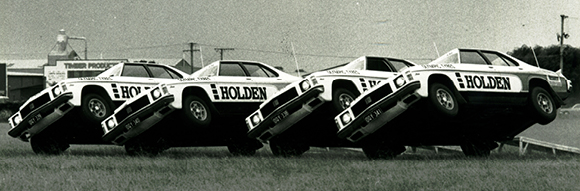
1971
.
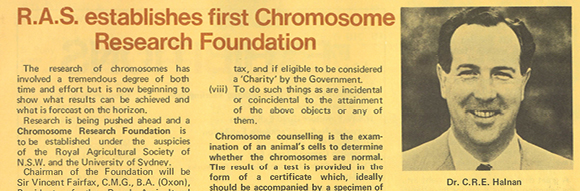
1973
The RAS together with Sydney University form the Chromosome Research Foundation, for the "purpose of research into hereditary defects in animals and human beings through the analysis of chromosomes within the stock themselves." The Foundation makes considerable contributions to scientific research until it is closed in 1984.
1985
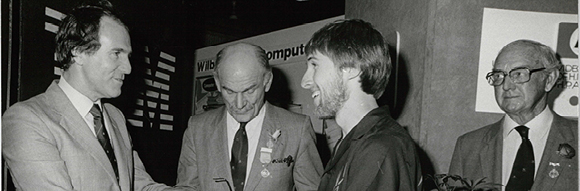
The Technology Pavilion opens to accommodate a RAS agriculturally oriented computer software competition.

1989
Created as a division of the RAS of NSW, the Australasian Animal Registry becomes the largest not-for-profit and most comprehensive animal registration and recovery service in Australasia.
1991
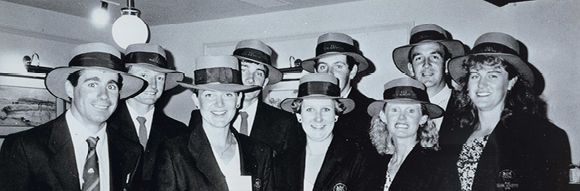
A state-wide leadership program open to young men and women aged 20 - 29, living and working in New South Wales. Run by the RAS of NSW, the award recognises future young leaders who are working to make a significant contribution to their local community and to rural Australia.
1994
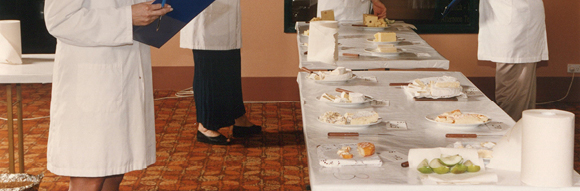
Dairy Produce had been given its own section at the Royal Easter Show in 1905. By 1994 the competition has grown so large that it is granted its own Show.
1994
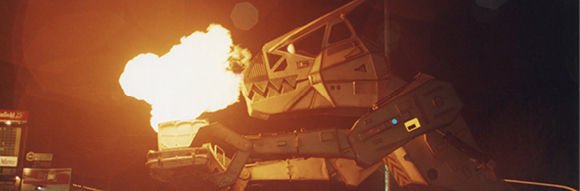
Imported from the US, Robosaurus appears as the high cost, high profile main attraction. Standing 7m tall and weighing over 30 tons, the fire breathing, car eating, mechanical monster returned in 1999 and 2010.
1996
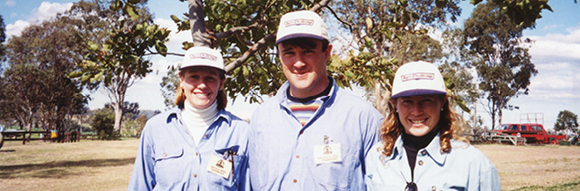
This competition tests individual competitors' practical farm skills and agricultural knowledge; inspired by the successful Young Farmer Contest, held in New Zealand since 1969.

1997
Emotions run high as exhibitors and showgoers say goodbye to the much loved site which served so well for 115 years.
1998
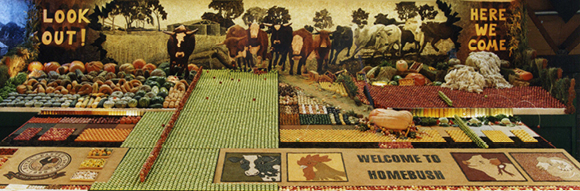
Fine Food has been a competitive event at the Show since 1870; in 1998 all Fine Food competitions are brought together under one banner to become the Sydney Royal Fine Food Show. This competition is evolving at a rapid rate in response to an ever-changing industry and new classes are established each year.
1998
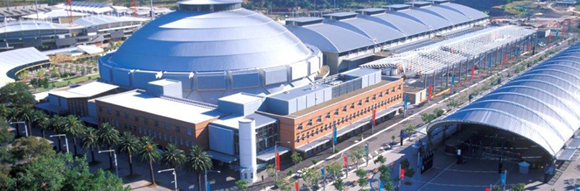
By the late 1980s the Sydney Royal Easter Show has outgrown its Moore Park facilities. In 1994 the NSW government approves its relocation to Sydney Olympic Park at Homebush, where the first Show is held in 1998.
2000
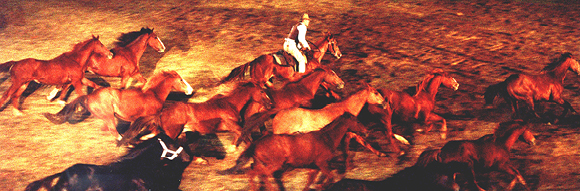
Many of the skilled horse riders involved in this display also participated in the Olympic Games opening ceremony. The act captivates patrons and returns in 2001 and 2004 and 2016.

2001
Support from the RAS means the Illabo Show Society can expand their Show to include a carcase competition. The two organisations run the Show as a joint project from this point.
2006
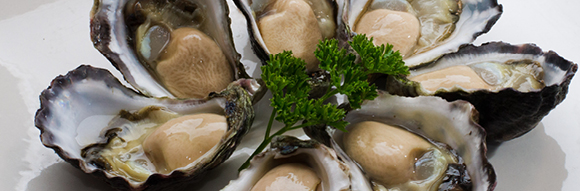
The RAS President's Medal is introduced to recognise outstanding achievement in Australia’s best producers. The award is the only one of its kind in Australia where producers are judged not only on their product quality but primarily on their triple bottom line - profitability, community engagement and sustainability.

2007
The RAS Foundation is created to help build strong, vibrant rural and regional communities through a range of targeted grants and scholarships to support education and community development in rural NSW.
2007
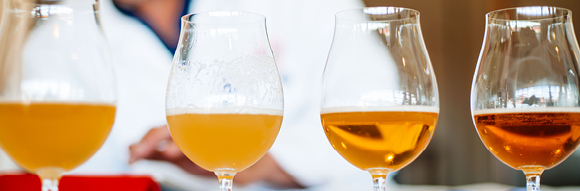
The competition originally includes only bottled beer but from 2009, draught beer classes became part of the stable of classes. Competition is expanded to include Cider classes in 2013.

2009
This is a revival of the Agri-Challenge competition run in the late 1990s, with a different format allowing teams of young farmers from regional NSW to compete in more complex challenges.
2010
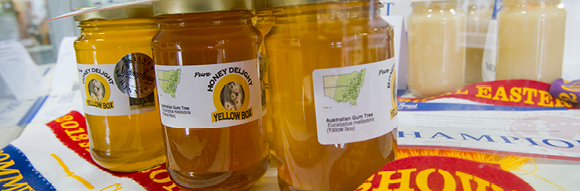
The National Honey Competition is established with the inclusion of three commercial classes. Honey has been judged at the Show as part of the Food, Agriculture and even Dairy Produce section since 1888.
2011
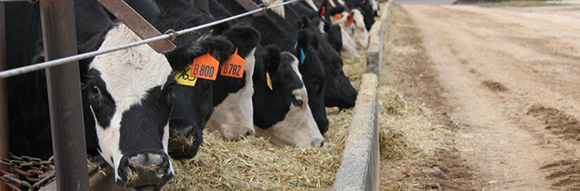
A commercially focused feedlot competition is established and is open for entries across Australia. Its focus in on live and carcase assessment of Export and Domestic classes of beef cattle.
2012
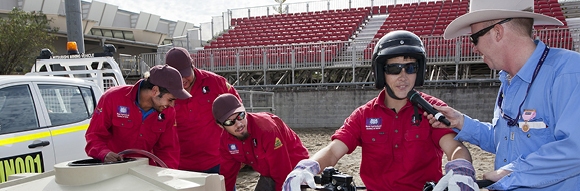
The first National Young Farmer Challenge is held at the Sydney Royal Easter Show. The competition is to be held at each State Show on a rotating basis.
2014
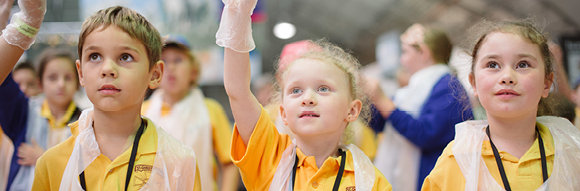
The Stables venue at Sydney Showground is established as the dedicated venue for the delivery of the year-round commitment to the RAS EDU schools education program.
2015
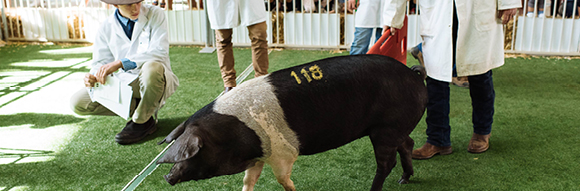
The Sydney Royal Easter Show incorporates a Commercial pig Competition, strengthening the existing competition and recognising the importance of enterprise in farming.
2018
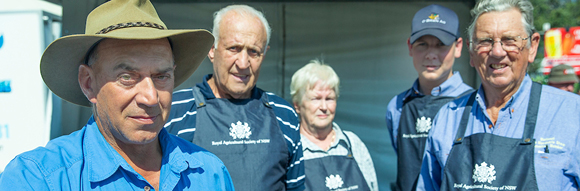
Recognising a need to support Regional Show Societies, the RAS creates a fundraising opportunity - a sausage sizzle with a purpose. Each day of the Show, a different Show Society mans the BBQ, raising much needed funds for their Society.
2019
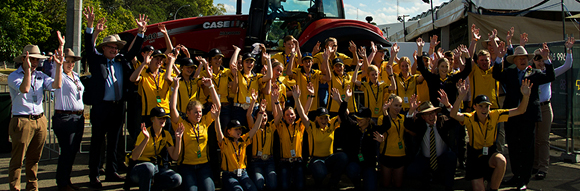
Initiated by the RAS Youth Group, this program provides an all-expenses-paid 4 day trip to the Show for up to 40 students from a regional school. It offers a behind the scenes look at the Show, interactive experiences and an escape from the land.

2020
Mass gatherings over 500 people were banned, forcing the decision to cancel the Show just three weeks before Opening Day.

2022
RAS Bicentenary – Through events, competitions and celebrations the RAS celebrated 200 years